
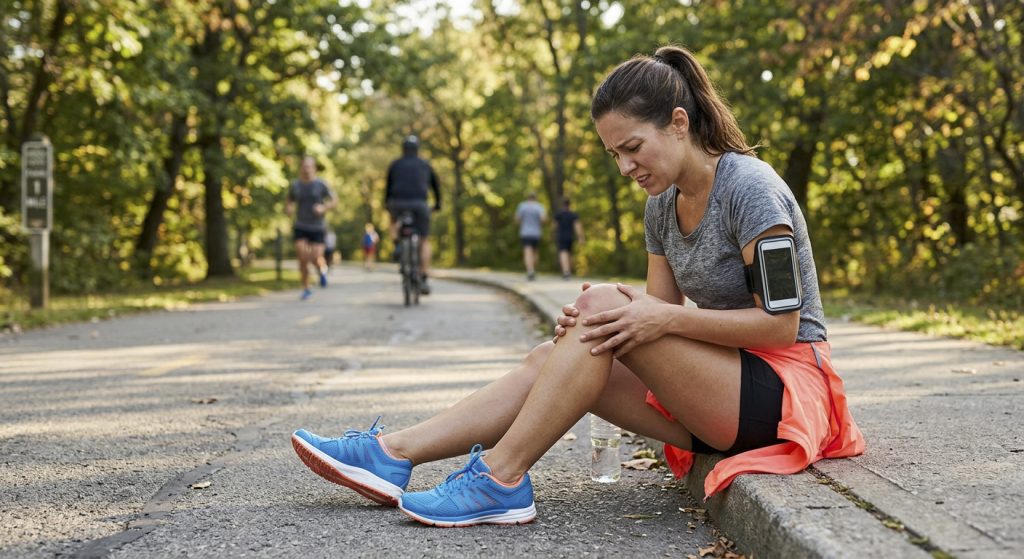
Ever felt a dull ache around or behind your kneecap after a jog, a long drive, or even walking down a flight of stairs?
You’re not alone.
One common cause is patellofemoral pain syndrome (PFPS), often referred to as runner’s knee. Despite the nickname, you don’t have to be a runner to experience it. PFPS can affect active people of all ages and is one of the most common knee complaints seen in physiotherapy clinics.
So, What’s Actually Causing the Pain?
PFPS occurs when the kneecap doesn’t move as smoothly as it should within the groove at the front of your knee. This can increase stress on the tissues around the kneecap and lead to pain and irritation.
But there’s rarely one single cause.
Your knee is part of a bigger movement system, and several factors can contribute to how much load it experiences. These may include:
- Weakness in the hips and glutes
- Tightness in the surrounding muscles
- Foot and ankle mechanics
- How your knee moves when you squat, run, jump or climb stairs
- Sudden increases in your activity levels
In other words, the painful knee may not be the only thing that needs attention.
Why Do Stairs and Running Make It Worse?
Certain activities place more demand on the knee joint and the muscles that control it.
You may notice your symptoms particularly during:
- Going downstairs — often one of the most noticeable triggers
- Running or jumping
- Squatting or kneeling
- Sitting for long periods, especially with your knees bent
That annoying ache after a long car trip or flight? It can be another clue that the kneecap and surrounding tissues aren’t tolerating sustained positions particularly well.
Your Hips Might Be Part of the Problem
Here’s something many people don’t realise: treating knee pain isn’t always just about strengthening the knee.
Research and clinical experience suggest that strengthening the muscles around your hips and pelvis can play an important role in managing PFPS. Your hip muscles help control the position and movement of your leg, which can influence how forces are transferred through the knee.
That’s why an effective rehabilitation program often looks beyond the painful spot.
Depending on your individual assessment, treatment may include:
- Hip, glute and knee strengthening
- Mobility exercises
- Gradual return to running or other activities
- Movement retraining
- Manual therapy where appropriate
- Addressing movement patterns that may be placing unnecessary stress on the knee
The goal isn’t simply to make the pain disappear. It’s to help your knee become stronger and more capable of handling the activities you want to get back to.
The Good News: Runner’s Knee Is Usually Very Manageable
The good news is that PFPS often responds well to the right rehabilitation approach.
Rather than completely avoiding activity or trying to push through the pain, a physiotherapist can help identify what is contributing to your symptoms and build a progressive plan around your goals.
Whether you want to get back to running, comfortably walk downstairs, return to the gym, or simply sit through a long car journey without that familiar knee ache, the right approach can make a significant difference.
When Should You See a Physio?
If your knee pain has been hanging around for more than a few days, keeps coming back, or is stopping you from doing the things you enjoy, it’s worth getting it assessed.
Trying to ignore persistent knee pain or repeatedly “pushing through” it may allow the problem to become more difficult to manage.
An individual assessment can help determine what’s actually driving your symptoms and whether PFPS is the right diagnosis — because not every type of knee pain is the same.
In Summary
Knee pain when jogging, squatting or walking downstairs is commonly associated with patellofemoral pain syndrome (PFPS), also known as runner’s knee. It can be influenced by a combination of factors, including hip and glute weakness, muscle tightness, foot mechanics and the way your knee moves during everyday activities.
The good news is that PFPS generally responds well to targeted rehabilitation. A combination of strengthening, mobility work, movement retraining and a gradual return to activity can help reduce pain and improve knee function.
If your knee pain persists, keeps returning, or starts limiting the activities you enjoy, seeing a physiotherapist for an individual assessment can help identify the contributing factors and get you moving confidently again.
Don’t let knee pain dictate what you can and can’t do. With the right assessment and rehabilitation plan, you can work towards getting your knee stronger, more resilient and back to doing what you love.