
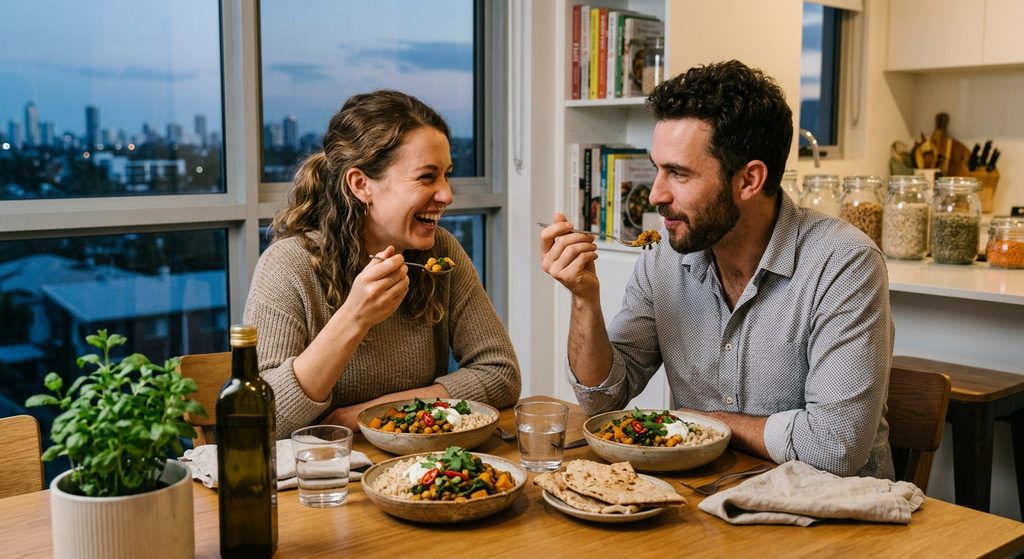
Switching to plant-based eating brings massive benefits for your health and the environment. A well-planned plant-based diet provides all the nutrients your body needs to thrive—it just takes a little intentional planning around protein and key micronutrients.
What is a Plant-Based Diet?
A plant-based lifestyle focuses primarily on whole foods from plants. You don’t have to eliminate animal products completely—many people adopt a flexible, “flexitarian” approach.
Core Foods Include:
- Vegetables & Fruits: Essential vitamins, minerals, and antioxidants.
- Whole Grains: Quinoa, oats, brown rice, and wholegrain bread.
- Legumes: Beans, lentils, and chickpeas.
- Nuts, Seeds & Soy: Chia seeds, pumpkin seeds, tofu, and tempeh.
Health Benefits
- Heart Health: Lowers saturated fat intake, reducing LDL (“bad”) cholesterol and supporting optimal blood pressure.
- Blood Sugar & Weight: Improves insulin sensitivity and aids in healthy weight management.
- Gut Microbiome: High fibre content feeds healthy gut bacteria and aids digestion.
- Disease Prevention: Associated with a reduced risk of type 2 diabetes and certain cancers.
Plant-Based Protein Guide
Plant proteins contain varying amounts of essential amino acids. Eating a diverse mix throughout the day easily covers your daily needs.
| Recommended Daily Protein | Common Plant Protein Sources |
| Women: 0.75 g/kg of body weight per day | Legumes (lentils, chickpeas, beans) |
| Men: 0.84 g/kg of body weight per day | Soy products (tofu, tempeh, edamame, soy milk) |
| Needs increase for older adults, active individuals, pregnant women, or recovery. | Whole grains (quinoa, rolled oats) & Seeds (chia, hemp, pumpkin) |
Common Pitfalls & Easy Fixes
- Over-relying on Processed Alternatives: Swap processed vegan meats for whole foods like legumes and tofu.
- Nutrient Gaps: Pay extra attention to Vitamin B12, Iron, Calcium, and Omega-3s. (B12 supplementation or fortified foods are strongly recommended for vegans).
- Low Energy: Make sure you eat enough total calories to meet your energy demands.
Quick Protein Hacks:
- Swap white rice for quinoa.
- Add lentils or beans to pasta sauces and soups.
- Snack on roasted chickpeas or edamame.
- Blend tofu or soy yoghurt into morning smoothies.
Frequently Asked Questions
Do I need to combine proteins at every meal?
No. As long as you eat a variety of protein sources across the whole day, your body gets all the amino acids it needs.
Will I become iron deficient without meat?
Not necessarily. Plant iron (non-heme) is absorbed best when paired with Vitamin C rich foods (like citrus, bell peppers, or berries) during meals.
Seeing a Dietitian
Whether you are transitioning to plant-based eating, managing diabetes, or optimizing heart health, personalized guidance makes all the difference.
Marcus Or | Accredited Practising Dietitian (APD), BNutr&Diet(Hons)
Locations: Runcorn QLD | Southport QLD
Phone: 1300 833 866
Email: reception@enhancedphysio.com.au
Web: www.enhanceddietetics.com.au