
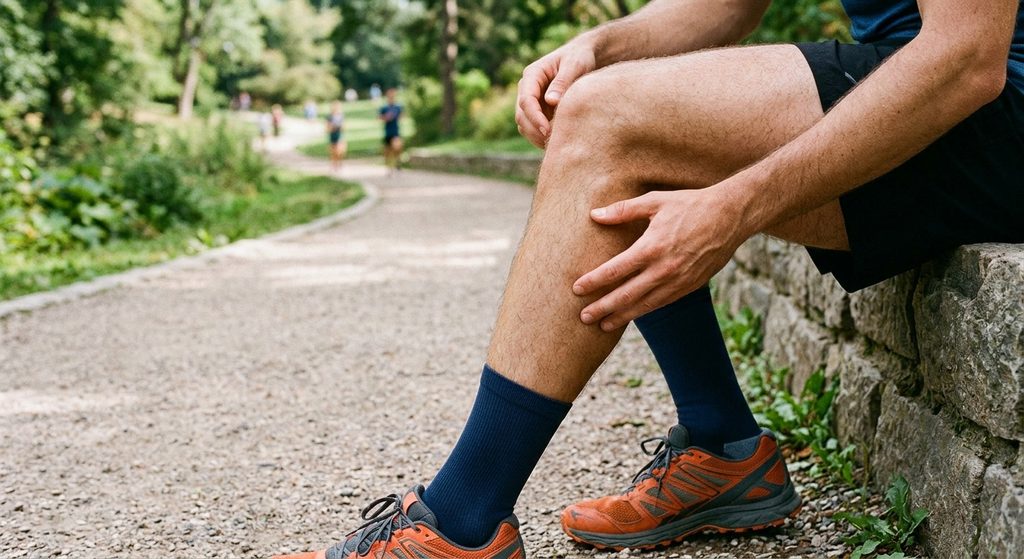
Why Do Shin Splints Develop?
Shin splints rarely have a single cause. They usually stem from a combination of training, physical capacity, and environmental factors:
- Sudden Training Spikes: Rapidly increasing your running distance, speed, frequency, or hill work.
- Returning to Sport: Resuming high-volume activity after a period of rest before the body has readapted.
- Repetitive Impact: Insufficient rest days between high-impact sessions.
- Reduced Strength: Low conditioning in the calves, feet, or lower-limb muscles.
- Surface Changes: Transitioning to harder surfaces, new terrain, or changing footwear.
How Physiotherapy Can Help
Physiotherapy focuses on settling your symptoms while building your leg’s capacity to handle impact again.
- 1. Activity Modification: Scaling back high-impact moves without stopping completely. Low-impact options like swimming or cycling keep you fit while your shin settles.
- 2. Progressive Strengthening: Targeted exercises build strength in the calves, feet, and hips to absorb shock better.
- 3. Foot & Ankle Mobility: Improving joint movement, ankle flexibility, and foot control ensures even distribution of impact forces.
- 4. Running Mechanics Assessment: Reviewing training volume, shoe selection, and stride patterns to identify practical tweaks.
- 5. Manual Therapy: Hands-on soft tissue techniques or mobilizations to ease local discomfort alongside active rehabilitation.
- 6. Recovery Education: Learning how to monitor symptoms and gradually increase training to prevent future flare-ups.
Shin Splints vs. Stress Fracture
Distinguishing MTSS from a bone stress injury is essential for a safe recovery:
- MTSS (Shin Splints): Tenderness is spread out across a wider section of the shin bone.
- Stress Fracture: Pain is pinpointed to one small spot on the bone and may hurt while resting or sleeping.
When to See a Doctor: Seek immediate medical evaluation if you experience sharp pain on a single spot, severe swelling, pain at night, or difficulty putting weight on your leg.
Long-Term Prevention
Preventing shin splints comes down to managing your workload. Gradually increase your running distance, maintain good calf strength, prioritize rest days, and listen to early warning signs of pain before returning to full speed.