
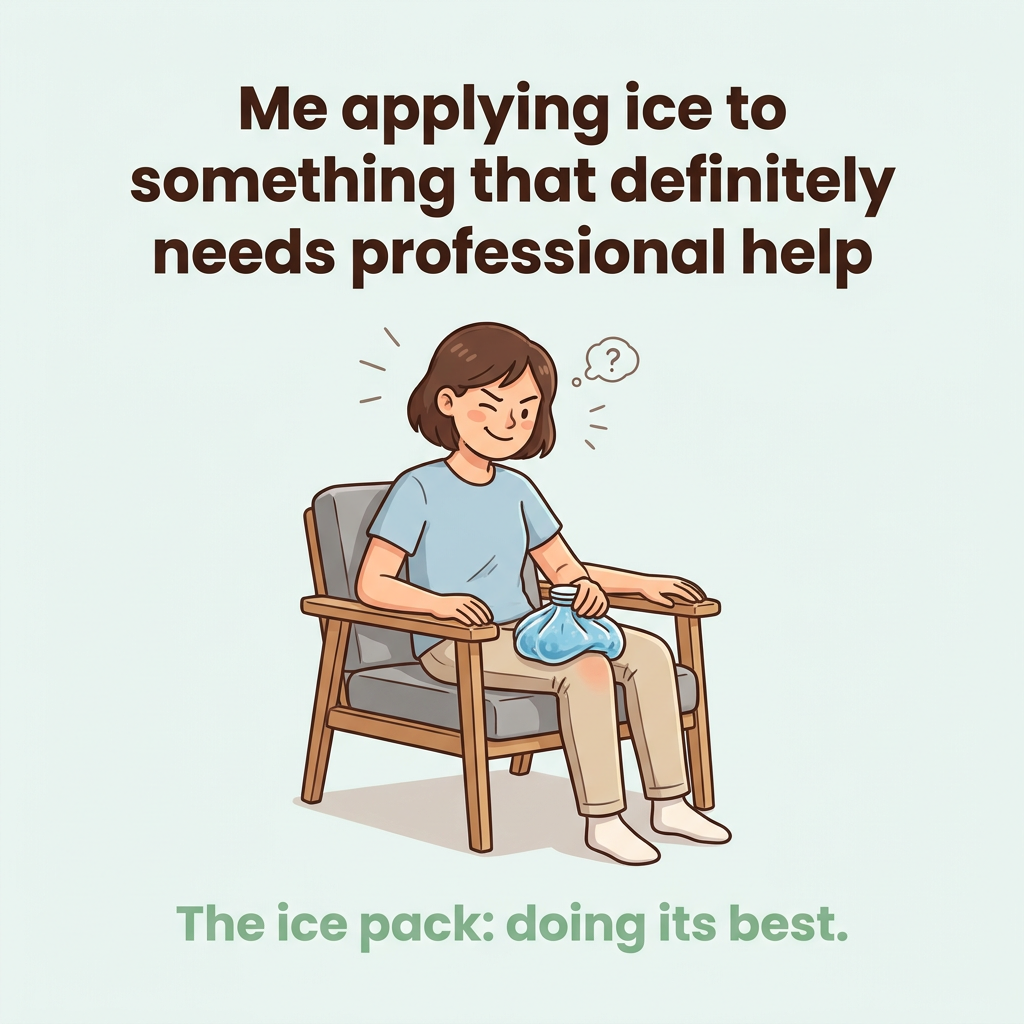
We’ve all seen it.
Someone limping dramatically. Holding their shoulder like it’s hanging on by a thread. Barely able to move.
And their solution?
A bag of frozen peas and pure optimism.
To be fair, ice can help in some situations. But sometimes people treat serious injuries like:
“If I ice it long enough, surely this problem will simply disappear.”
Meanwhile the injury is actively negotiating for professional help.
Ice Isn’t Magic (Sorry)
Ice can help:
- Reduce pain temporarily
- Calm down irritation
- Provide short-term relief after an injury
But ice doesn’t:
- Repair torn tissue
- Restore strength
- Improve movement
- Fix instability
- Tell you what’s actually wrong
So while icing has its place, it’s usually just one small part of recovery — not the whole treatment plan.
The Classic “It’s Probably Fine” Injuries
You know the ones:
- The ankle that sounds like bubble wrap when you walk
- The shoulder that only moves “up to here”
- The back pain that now requires a three-step turning process
- The knee that suddenly doesn’t trust stairs anymore
But instead of getting it checked, people often:
- Ice it
- Rest for a bit
- Test it too early
- Re-injure it
- Repeat the cycle
Why Some Injuries Need More Than Rest and Ice
A lot of injuries improve with simple self-management.
But some injuries need proper assessment because there may be:
- Significant weakness
- Joint instability
- Loss of movement
- Ongoing swelling
- Reduced ability to load the area
- Pain that isn’t improving over time
The longer these issues go unaddressed, the more frustrating recovery can become.
Signs It Might Be Time for Professional Help
It’s probably worth getting assessed if:
- You can’t move normally
- Pain is getting worse instead of better
- Swelling is significant
- You’re limping or compensating heavily
- Symptoms keep returning
- You’ve been “waiting it out” for weeks
Especially if your current treatment plan is:
“Ice and hope for the best.”
What Physiotherapists Can Do Beyond Ice
Physios don’t just tell you to rest and hand you an ice pack.
They can help by:
- Assessing the actual severity of the injury
- Identifying what structures may be involved
- Restoring strength and mobility safely
- Guiding return to sport, gym, or work
- Reducing the risk of re-injury
- Creating a proper recovery plan instead of guesswork
Because recovery usually needs more than just frozen vegetables and positive thinking.
Final Thoughts
Ice can absolutely help with short-term pain relief.
But if an injury is limiting your movement, strength, or daily function, it may need more than temporary symptom management.
Sometimes the body just needs time.
And sometimes it needs an actual plan.