
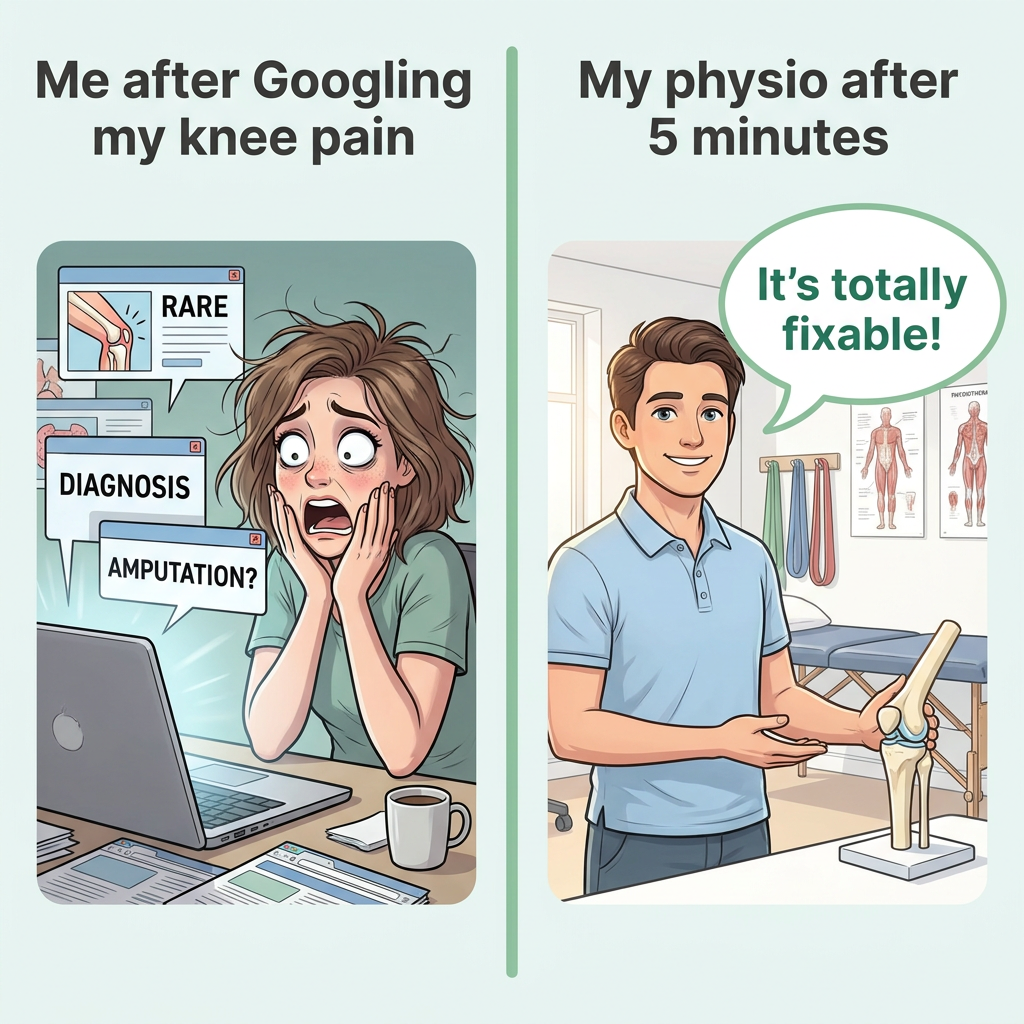
It starts simply.
You notice a bit of tightness, a small ache, or something that feels “off.”
So you do what almost everyone does:
You Google it.
A few minutes later, you’ve gone from:
“Hmm, that’s a bit sore”
to:
“I think I might have 12 possible conditions and possibly need urgent attention”
The Internet Is Very Confident (Sometimes Too Confident)
When you search symptoms online, you usually get two extremes:
- “It’s probably nothing serious”
- “Seek urgent medical attention immediately”
There’s not much in between.
So a simple muscle ache can suddenly sound far more serious than it actually is.
The Problem: Symptoms Don’t Work Like Google
Your body doesn’t send clear, labelled messages like:
“Hello, this is a mild muscle tightness. No need to worry.”
Instead, symptoms can come from lots of different things, such as:
- Muscle tightness or overload
- Sitting for long periods
- Stress and tension
- Changes in activity or exercise
- Poor sleep or recovery
The same symptom can mean very different things depending on the person.
Google doesn’t know your full situation — it just lists possibilities.
How People Get Stuck in the “Google Spiral”
It usually goes like this:
- Notice a symptom
- Google it
- Read a list of possible causes
- Focus on the worst one
- Start feeling more worried
- Symptom feels worse
- Google it again
And suddenly, a small issue feels much bigger than it really is.
Why Symptoms Feel Worse After Googling
Stress and worry can actually make symptoms feel stronger.
When you’re anxious:
- Muscles tense up more
- You notice sensations more easily
- Pain feels more intense
- You become more aware of your body
So the Googling doesn’t just inform you — it can physically change how things feel.
A Better Way to Think About It
Instead of asking:
“What serious condition could this be?”
Try asking:
“What might be contributing to this right now?”
Common causes include:
- Posture (like sitting at a desk for long periods)
- Muscle tightness or weakness
- Changes in activity levels
- Stress and fatigue
- Not enough movement during the day
Most of the time, symptoms are linked to everyday load and movement — not something rare.
When It’s Worth Getting It Checked
It’s a good idea to get professional advice if:
- Symptoms keep coming back
- Pain is affecting your daily activities
- Things aren’t improving
- You’re unsure what to do
- You feel stuck relying on Google for answers
What Physiotherapists Can Do (Instead of Guessing Online)
Physios look at the full picture, not just the symptom.
They can help by:
- Identifying what’s actually causing the issue
- Assessing how you move and load your body
- Providing targeted exercises for strength and mobility
- Reducing pain through guided movement
- Helping prevent symptoms from returning
- Giving clear answers instead of uncertainty
Final Thoughts
Googling symptoms is common — and understandable.
But it often replaces clarity with confusion.
Most symptoms are not mysterious or dramatic.
They’re usually your body reacting to load, movement, or lifestyle factors.
If something doesn’t feel right, the goal isn’t to guess the worst-case scenario — it’s to understand what your body actually needs.