
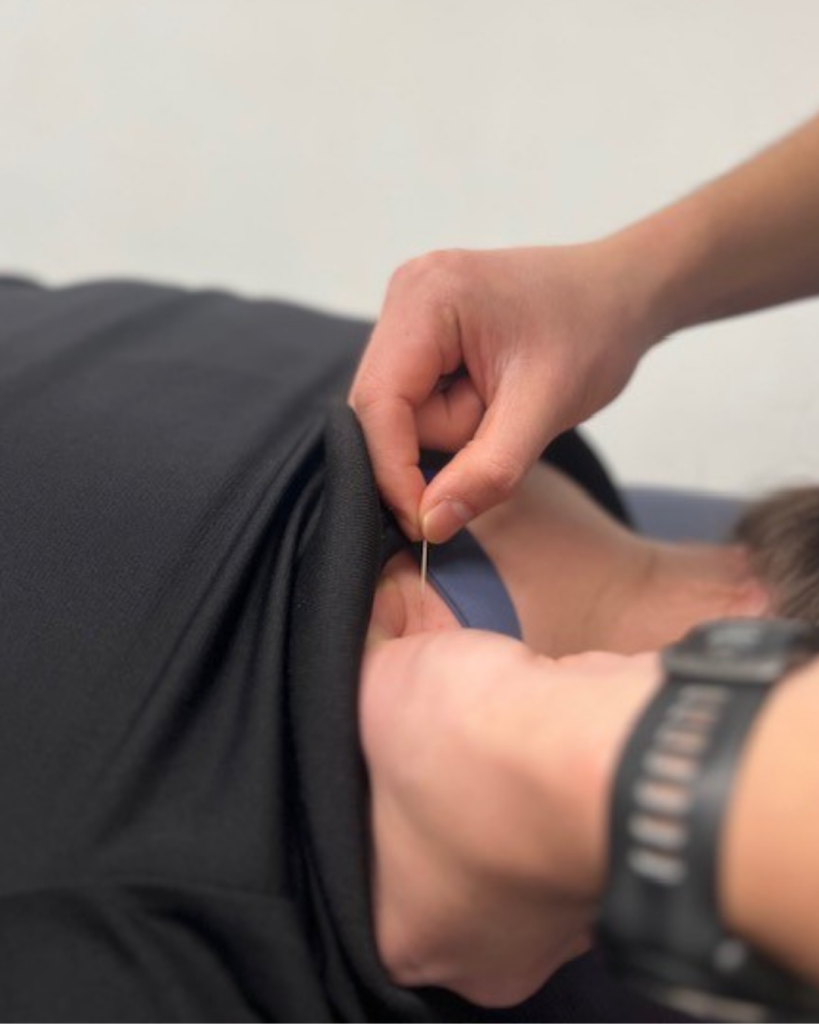
Dry needling is a treatment technique that some physiotherapists use to help manage muscle pain, tightness, and movement-related symptoms. If you’ve been dealing with persistent muscle tension, painful trigger points, or difficulty moving comfortably, you may have heard dry needling recommended as part of your treatment.
The good news is that dry needling can be used alongside exercise and other physiotherapy techniques to help reduce pain and improve movement. Understanding what it is, how it works, and what to expect can make the treatment feel much less daunting.
What Is Dry Needling?
In simple terms, dry needling involves inserting a very fine, sterile needle into specific areas of muscle or soft tissue.
The technique is often used to target sensitive or tight areas within a muscle, sometimes referred to as trigger points. Your physiotherapist may use dry needling as part of a broader treatment plan designed to improve movement and help you return to your normal activities.
Despite the name, no medication or fluid is injected into the body — the needle itself is the treatment.
Dry needling is generally used alongside active rehabilitation rather than as a stand-alone solution. Exercise, movement, strengthening, and gradual return to activity remain important parts of managing many musculoskeletal conditions.
What Does Dry Needling Feel Like?
Everyone responds to dry needling differently, but you may experience some of the following sensations:
- A brief prick as the needle passes through the skin.
- A twitch or brief cramping sensation in the muscle.
- A feeling of pressure, heaviness, or aching during or after treatment.
- Mild muscle soreness following the session, similar to how a muscle can feel after exercise.
Your physiotherapist should explain what you can expect before treatment and make sure you are comfortable throughout the session.
If you are uncomfortable at any point, let your physiotherapist know so the treatment can be adjusted.
How Can Dry Needling Help?
Dry needling may be used to help manage pain and sensitivity in muscles and improve how comfortably you move.
It may be considered when muscles feel particularly tight or sensitive, or when pain is making certain movements or exercises more difficult.
Three common reasons a physiotherapist may use dry needling are:
Reducing Muscle Sensitivity
Some muscles can become particularly sensitive when they have been exposed to increased physical demands or are contributing to an ongoing pain problem.
Dry needling may help reduce this sensitivity in the short term, making movement and exercise more comfortable.
Improving Movement
Pain and muscle sensitivity can sometimes make certain movements feel restricted or uncomfortable.
Dry needling may be used alongside movement exercises to help you move more comfortably and confidently.
Supporting Exercise and Rehabilitation
Exercise is an important part of many physiotherapy treatment plans. However, pain or muscle sensitivity can sometimes make it difficult to perform exercises comfortably.
In these situations, dry needling may be used as an additional treatment to help settle symptoms and allow you to participate more effectively in your rehabilitation program.
What Conditions Can Dry Needling Be Used For?
Dry needling may be considered as part of physiotherapy treatment for a range of musculoskeletal problems.
Depending on your individual assessment, it may be used for symptoms involving areas such as:
- Neck and shoulder pain.
- Upper or lower back pain.
- Hip and gluteal pain.
- Knee pain.
- Calf or lower-leg muscle tightness.
- Sports-related muscle pain and tension.
Dry needling isn’t appropriate for everyone, and its suitability depends on your symptoms, medical history, and individual circumstances. Your physiotherapist can discuss whether it is an appropriate option for you.
What Happens During a Dry Needling Session?
Before treatment, your physiotherapist will assess your symptoms and discuss your goals. They may then identify specific muscles or areas that could be appropriate for dry needling.
The skin is cleaned before the sterile, single-use needles are inserted into the targeted tissue.
Depending on the treatment approach, the needles may remain in place for a short period or be gently manipulated before being removed.
Afterwards, your physiotherapist may recommend movement exercises, strengthening exercises, or other rehabilitation techniques to help you make the most of the treatment.
Are There Any Side Effects?
Dry needling is generally well tolerated when performed by an appropriately trained practitioner, but minor side effects can occur.
These may include:
- Temporary muscle soreness.
- Minor bruising or bleeding at the needle site.
- Temporary aching or fatigue in the treated muscle.
More serious complications are uncommon, but the technique does carry some risks. Your physiotherapist should discuss the treatment with you beforehand and make sure it is appropriate for your individual circumstances.
If you have any concerns about dry needling, including needles, bleeding, medications, pregnancy, or other health conditions, let your physiotherapist know before treatment.
How Can Physiotherapy Help?
Dry needling is only one tool that may be used within a physiotherapy treatment plan.
A physiotherapist can assess your symptoms, identify factors that may be contributing to your pain, and develop a rehabilitation program tailored to your goals.
Treatment may include:
Dry needling: Targeted needling may be used to help manage muscle sensitivity and pain as part of your rehabilitation.
Strengthening exercises: Progressive exercises can help improve muscle strength and your body’s ability to tolerate physical demands.
Movement and mobility work: Exercises can help restore comfortable movement and improve confidence in using the affected area.
Hands-on treatment: Massage, soft tissue techniques, or joint mobilisation may be used to help manage symptoms and improve movement.
Education and activity advice: Understanding your symptoms and how to gradually modify and increase activity can help you stay active while your body adapts.
Gradual return to activity: As your symptoms improve and your capacity increases, your physiotherapist can help you progressively return to work, exercise, sport, and everyday activities.
When Should You Seek Help?
Consider seeing a physiotherapist if your pain or muscle tightness:
- Isn’t improving over time.
- Is interfering with work, exercise, sleep, or everyday activities.
- Is limiting your movement or making certain activities difficult.
- Keeps returning despite rest or changes to your activity.
- Is affecting your ability to exercise or participate in sport.
A thorough assessment can help determine what may be contributing to your symptoms and whether dry needling or another treatment approach may be appropriate.
The Bottom Line
Dry needling can be a useful treatment technique for some people experiencing muscle pain, tightness, or sensitivity. While it may help reduce symptoms and improve movement in the short term, it works best as part of a broader rehabilitation approach.
Combining appropriate treatment with strengthening, movement, education, and gradual loading can help you build your body’s capacity and work towards returning to the activities you enjoy.
Summary
Dry needling is a physiotherapy treatment technique that uses fine, sterile needles to target specific muscles or soft tissues. It may be used to help manage pain, muscle sensitivity, and movement difficulties.
Dry needling can be combined with exercise, strengthening, mobility work, hands-on treatment, and gradual return to activity. If you’re experiencing ongoing pain or muscle tightness that is affecting your everyday activities, work, exercise, or sport, a physiotherapy assessment can help determine the most appropriate approach for you.