
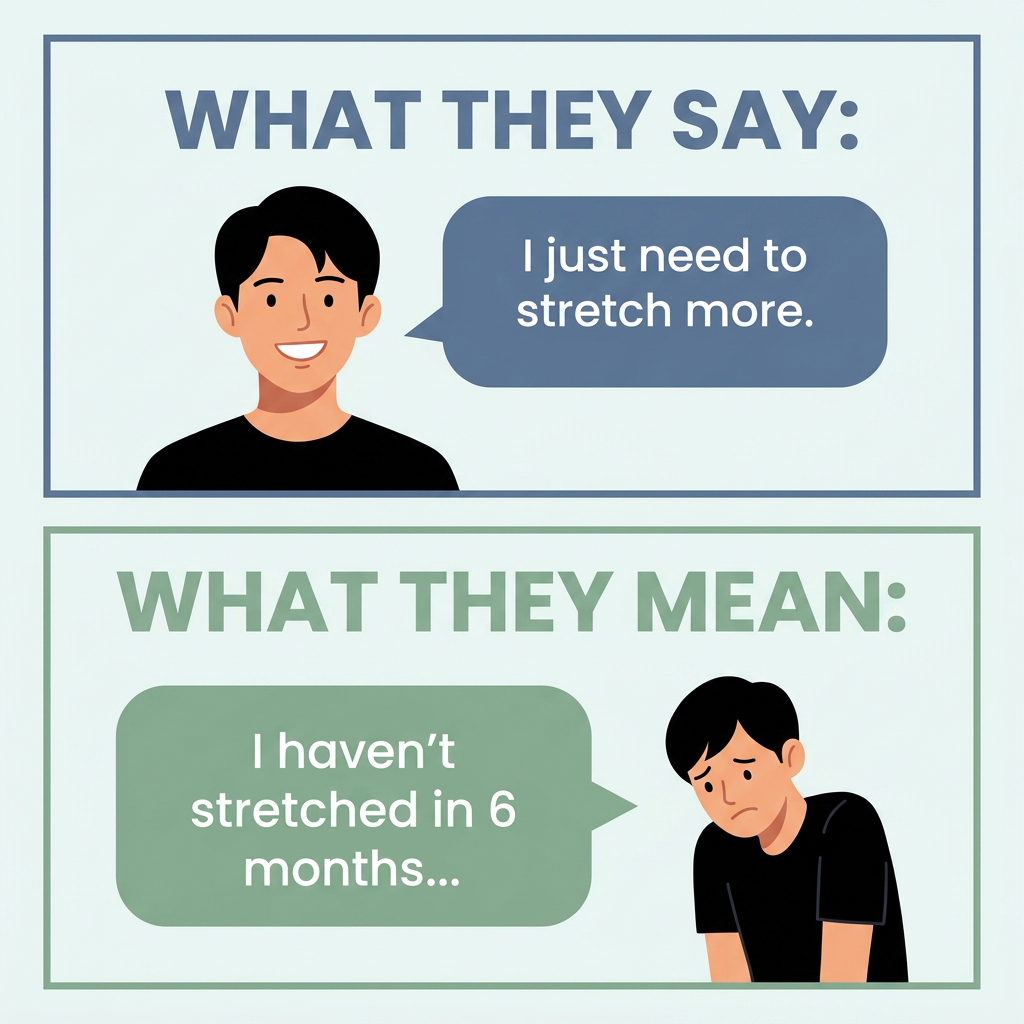
Why Stretching Matters
Stretching is one of the simplest and most effective ways to help your body feel better when it’s stiff, tight, or restricted. It’s often the first thing people reach for — and for good reason.
When done regularly, stretching can help improve flexibility, ease muscle tension, and restore a sense of ease in movement. It can also be a helpful way to unwind after long periods of sitting, training, or physical work.
But while stretching is useful, it works best as part of a bigger picture rather than a stand-alone solution.
What Stretching Actually Helps With
Stretching can play an important role in maintaining how your body moves and feels day to day. It may help:
- Improve flexibility in muscles and joints
- Reduce short-term stiffness and tightness
- Support general mobility
- Increase temporary range of motion
- Promote relaxation and recovery after activity
In many cases, stretching is a great way to “reset” the body — especially after long periods of inactivity or repetitive movement.
However, that improvement is often temporary if the underlying causes of tightness aren’t addressed.
Why Tightness Often Comes Back
If you find yourself stretching the same areas over and over, it’s often not just a flexibility issue.
Common contributors include:
- Prolonged sitting or static positions
- Muscle weakness or poor load tolerance
- Repetitive movement patterns
- Stress and fatigue
- Reduced daily movement
- Limited joint mobility
This is why stretching alone sometimes feels good in the moment, but doesn’t fully solve the problem long term.
Stretching Works Best When It’s Part of a Bigger System
True mobility isn’t just about how far a muscle can lengthen. It’s about how well your body can control movement through its available range.
That means flexibility is only one part of the equation. Strength, control, and coordination all matter just as much.
Simple Ways to Get More Out of Stretching
If you’re already stretching, a few simple adjustments can make it more effective:
- Stretch consistently rather than occasionally
- Hold stretches long enough to allow change
- Pair stretching with movement (not just still positions)
- Include strength work for the same areas you feel tight
- Break up long periods of sitting with regular movement
- Use stretching as part of a warm-up or cool-down, not the whole routine
What Physiotherapists Can Do In Addition to Stretching
Stretching is often just the starting point. Physiotherapists look beyond tightness to understand why it’s happening in the first place.
In addition to prescribing stretching, physios can help with:
- Identifying the underlying cause of tightness or restriction
- Assessing strength, control, and movement patterns
- Designing targeted strengthening programs
- Improving joint mobility where needed
- Retraining movement habits to prevent symptoms returning
- Guiding return to sport or activity safely
- Managing pain through education and hands-on treatment when appropriate
Final Thoughts
Stretching can absolutely help your body feel better — especially in the short term. It’s a useful tool for reducing stiffness and improving comfort.
But long-term change usually comes from combining stretching with better movement habits, strength, and guidance tailored to your body.
If stretching is your starting point, that’s great. The next step is understanding what your body needs to stay moving well.