
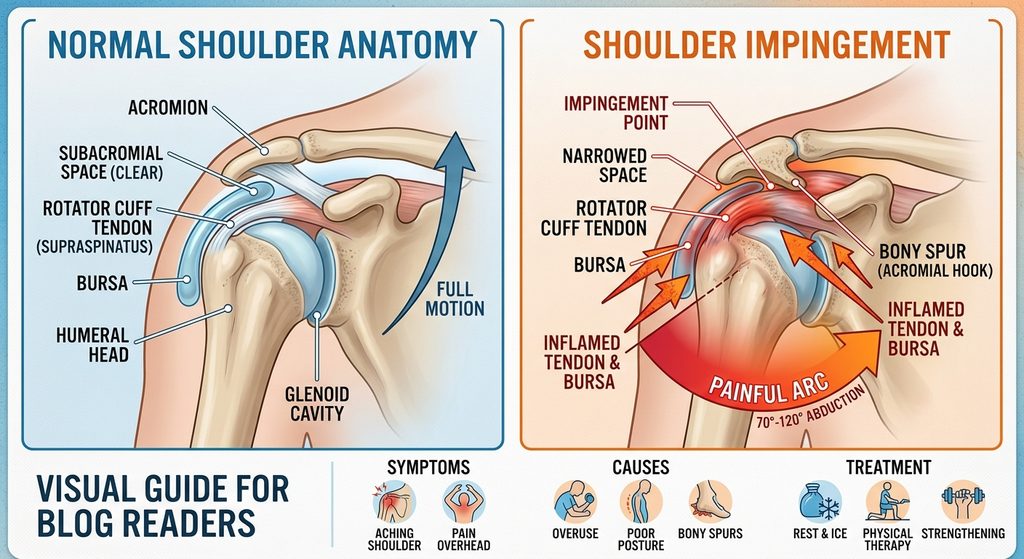
Shoulder pain can make everyday activities like reaching overhead, putting on a jacket, or sleeping on your side surprisingly difficult. If you’re experiencing pain when lifting your arm or reaching behind your back, you may be dealing with what’s commonly referred to as shoulder impingement.
The good news is that shoulder pain doesn’t have to stop you from doing the activities you enjoy. With the right approach to movement, strengthening, and gradual loading, your shoulder can become stronger and more comfortable.
What Is Shoulder Impingement?
In simple terms, shoulder impingement describes irritation or sensitivity of the tissues around the shoulder as you move your arm, particularly when reaching overhead.
The rotator cuff tendons and a small fluid-filled sac called the bursa sit around the shoulder joint. As you raise your arm, the space around these tissues naturally changes. In some people, this movement can contribute to irritation and pain.
It’s important to remember that this movement happens in healthy shoulders too. The goal of rehabilitation isn’t necessarily to “create more space,” but to improve your shoulder’s strength, movement, and tolerance to load.
What Symptoms Should You Look Out For?
Shoulder pain can present in different ways, but common symptoms include:
- Pain around the front or side of the shoulder, particularly when lifting your arm.
- Pain with movement, especially reaching overhead or behind your back.
- Clicking, catching, or discomfort as the shoulder moves.
- Pain when sleeping on the affected shoulder, which can make getting a good night’s sleep difficult.
Everyone’s shoulder is different, so an assessment can help determine what may be contributing to your symptoms.
What Causes Shoulder Pain?
There isn’t always one single cause of shoulder impingement. Often, pain develops when the shoulder is exposed to more load than it is currently able to tolerate.
Two common contributing factors are:
Repetitive or Heavy Loading
Activities involving repeated or heavy lifting can place increased demands on the muscles and tendons around your shoulder. A sudden increase in training, work, or sporting activity can sometimes trigger symptoms.
Reduced Shoulder Strength and Control
The rotator cuff and shoulder blade muscles play an important role in controlling shoulder movement. If these muscles aren’t strong enough or haven’t adapted to the demands being placed on them, certain activities may become painful.
The good news is that shoulders can adapt. With the right rehabilitation program, you can gradually build strength, confidence, and tolerance to the activities that matter to you.
How Can Physiotherapy Help?
A physiotherapist can assess your shoulder, identify factors that may be contributing to your pain, and develop a rehabilitation plan tailored to your goals.
Treatment may include:
- Activity modification: Temporarily reducing or adjusting activities that significantly aggravate your symptoms while keeping you moving where possible.
- Strengthening exercises: Progressive exercises can target the rotator cuff and shoulder blade muscles and gradually improve your shoulder’s capacity.
- Movement and mobility work: Exercises can help you restore comfortable movement and confidence in using your shoulder.
- Hands-on treatment: Soft tissue techniques and joint mobilisation may help reduce pain and improve movement, particularly when combined with an active exercise program.
- Gradual return to activity: As your shoulder becomes stronger and more tolerant, you can progressively return to lifting, sport, work, and other activities.
When Should You Seek Help?
Consider seeing a physiotherapist if your shoulder pain:
- Isn’t improving over time.
- Is interfering with work, exercise, sleep, or everyday activities.
- Is becoming increasingly painful or difficult to manage.
- Is accompanied by significant weakness, particularly following an injury.
A thorough assessment can help identify what’s going on and guide you towards an appropriate treatment plan.
The Bottom Line
Shoulder pain doesn’t mean you need to give up the activities you love. While shoulder impingement can be painful and frustrating, the shoulder is capable of becoming stronger and more resilient.
With the right exercises, sensible activity modification, and gradual loading, you can build your shoulder’s strength and confidence and work towards getting back to the things you enjoy.
Summary
Shoulder impingement is a common cause of shoulder pain, particularly with overhead movements and reaching behind your back. It involves irritation or sensitivity of tissues around the shoulder and can be influenced by factors such as increased activity, repetitive loading, and reduced strength or capacity.
Physiotherapy can help through a combination of activity modification, strengthening, movement exercises, hands-on treatment, and gradual return to activity. If your shoulder pain isn’t improving, is affecting